- Home
- Types of Knit Stitches
- Knit Moss Stitch
How to Make the Knit Moss Stitch
By Janice Jones, Certified Knitting & Crochet Instructor (Craft Yarn Council) Last updated May 15, 2026
The knit moss stitch is a beginner-friendly stitch pattern that creates a dense, beautifully textured fabric that lies flat and looks the same on both sides. Moss stitch belongs to the Knit and Purl Stitches family because it creates texture using only knit and purl stitches. You can also browse the full Types of Knit Stitches guide if you are comparing stitch families.
What Is the Knit Moss Stitch?
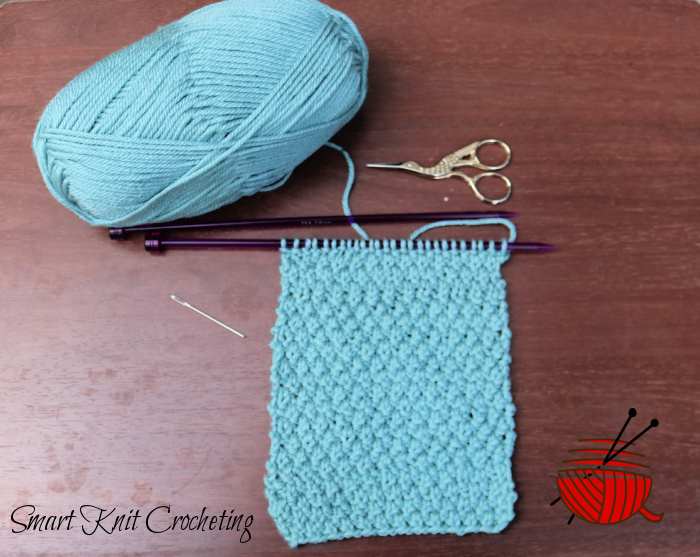 The Knit Moss Stitch (aka Irish Moss, American Moss)
The knit moss stitch is a textured stitch pattern worked over a four-row repeat. Unlike seed stitch, which alternates knit and purl stitches every row, moss stitch works the same sequence for two rows before switching.
This small change creates a fabric that is:
- Thicker and warmer than stockinette
- Less stretchy than ribbing
- Fully reversible
- Resistant to curling
Because of these qualities, moss stitch is especially popular for scarves, cowls, blankets, washcloths, and other projects where both sides of the fabric will show.
Moss Stitch At a Glance
- Skill level: Beginner
- Also called: Irish Moss, American Moss, UK Double Moss
- Repeat: 4-rows
- Reversible: Yes, this stitch is reversible.
- Multiple: Any even number of stitches
- Fabric behavior: Lies flat, dense, reversible
- Best uses: Scarves, cowls, blankets, washcloths
How to Make the Knit Moss Stitch (Flat Using Straight Needles)
Abbreviations
K = Knit
P = Purl
Rep = Repeat
RS = Right side
St(s) = Stitch(es)
WS = Wrong side
Instructions for Working Flat on Straight Needles
Row 1 (RS): *K1, p1; rep from * to end of row.
Row 2 (WS): *K1, p1; rep from * to end of row.
Row 3: *P1, k1; rep from * to end of row.
Row 4: *P1, k1; rep from * to end of row.
Repeat Rows 1-4 for the pattern
Instructions for Working Flat in Chart Form
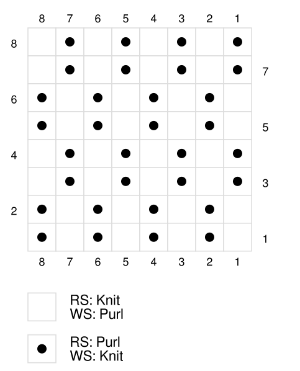 Moss Stitch (American Moss Stitch) British Double Moss Stitch, Irish Moss Stitch
Instructions for Working in the Round on Circular Needles
Cast on any even number of stitches. Join to work in the round, being careful not to twist your stitches. Place a stitch marker to mark the beginning of the round.
Round 1: *K1, p1; rep from * to end of round.
Round 2: *K1, p1; rep from * to end of round.
Round 3: *P1, k1; repeat from * to end of round.
Round 4: *P1, k1; repeat from * to end of round.
Repeat Rounds 1–4 until your project reaches the desired length. Bind off loosely in pattern.
What is the Difference Between the Seed Stitch and the Moss Stitch
Because both stitches use alternating knit and purl stitches and create a similar textured fabric, many beginners assume they are identical even though the row structure differs. Remember, the seed stitch is created with alternating knit and purl stitches in a simple two-row repeat:
Row 1: K1 P1
Row 2: P1 K1
In other words, you always knit the purl stitches and purl the knit stitches.
Common Knit Moss Stitch Problems (and How to Fix Them)
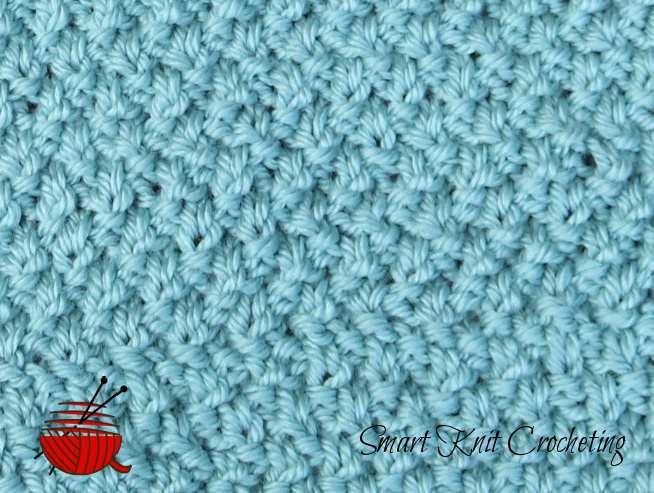 Knit Moss Stitch
Even though the knit moss stitch is easy, there are a few common mistakes that can cause the fabric to look wrong. The good news? All of them are easy to fix once you know what to watch for.
Uneven Tension That Makes the Texture Look Messy
Moss stitch highlights differences between knit and purl tension more than stockinette does. Loose purls or tight knits can make the fabric look uneven. Tension problems are among the most significant issues beginners encounter, but tension improves with more experience.
How to fix it:
- Slow down when switching between knit and purl stitches
- Gently snug the yarn after purl stitches
- Practice on a small swatch before starting a larger project
- Blocking will help, but even a bit of tension while knitting makes the biggest difference.
Accidentally Knitting Seed Stitch Instead of Moss Stitch
This is by far the most common mistake. I know, I've done this many times, and it is likely because this is an easy stitch, and you are very relaxed and not paying attention. You may also be tired from knitting for too long.
If your fabric looks flatter and less textured than expected, you may be alternating your knit and purl stitches every row instead of every two rows.
How to fix it:
Remember that moss stitch uses a four-row repeat:
- Rows 1 and 2 are the same
- Rows 3 and 4 are the opposite
Stop and check periodically, usually after every couple of rows. By doing this you can fix your mistake without having to rip out too many rows.
Losing Track of Which Row You’re On
This one goes along with the one above. Because moss stitch changes every two rows, it’s easy to forget where you are, especially if you set your work down mid-project.
How to fix it:
- Use a row counter or tally marks to keep track of the row you are on.
- Placing a removable stitch marker every four rows can also help beginners stay on track.
- Or glance at your fabric: If the last stitch you worked was a knit bump, the next row likely needs to repeat the same sequence.
Does Moss Stitch Affect Gauge or Drape?
How Moss Stitch Affects Gauge
Stitch Gauge
- Moss stitch is slightly wider than stockinette
- It does not pull in like ribbing
- Width is relatively stable and predictable
Row Gauge
- Moss stitch produces shorter rows than stockinette
- The fabric builds height more slowly
- Projects may end up shorter than expected if you don’t measure as you go
Yarn Usage
- Moss stitch uses more yarn than stockinette
- Less yarn than heavy cables or brioche
- Expect slightly higher yardage needs
How Moss Stitch Affects Drape
Moss stitch creates a denser, more structured fabric. This means:
- Stands away from the body more than stockinette
- Holds shape well
- Feels warm and substantial
- Less fluid movement
This is why moss stitch works beautifully for:
- Cowls
- Scarves
- Blankets
- Washcloths
…and why it’s not ideal for:
- Flowing garments
- Lightweight shawls
- Projects that need stretching
Frequently Asked Questions about the Knit Moss Stitch
Does the knit moss stitch pattern lie flat or tend to curl?
Does the knit moss stitch pattern lie flat or tend to curl?
This is a great pattern if you want a fabric that will lie flat. It is also easy to block.
Is this stitch reversible?
Is this stitch reversible?
Yes, the right side or public side looks exactly like the wrong side, so it is perfect for articles where you’d want both sides to show, as in a blanket.
Can you explain the Difference between the American Moss Stitch and the Irish Moss Stitch?
Can you explain the Difference between the American Moss Stitch and the Irish Moss Stitch?
Different countries use different terms for the same stitch.
Here’s the simplest way to think about it:
- U.S. Moss Stitch = 4-row repeat (this tutorial)
- U.K. Double Moss Stitch = same 4-row repeat
- U.S. Seed Stitch = 2-row repeat
- U.K. Moss Stitch = same as U.S. seed stitch
You may also hear the U.S. moss stitch called Irish moss or American moss stitch. These names all refer to the same four-row pattern shown on this page.
How does the American Moss Stitch differ from the Moss Stitch in the U.K?
How does the American Moss Stitch differ from the Moss Stitch in the U.K?
The American Moss Stitch uses a four-row repeat, where the British Moss Stitch uses a two-row repeat, which is also identical to the American Seed Stitch.
What Can you Make with the Knit Moss Stitch?
What Can you Make with the Knit Moss Stitch?
Since the knit moss stitch is straightforward and beginner-friendly, it’s a great pattern for practicing those new knitting skills. It creates a beautiful, textured fabric that can be as thick as you like.
There are so many different possibilities.
Washcloths, mats, coasters, and scarves are just a few of the straightforward projects to try out this stitch. Consider a thick cowl or a heavy jacket made with bulky yarn and big needles.
A chunky warm blanket for those cool winter nights would also make an excellent gift for a special person.
Pin for Future Reference
Related Stitch Patterns
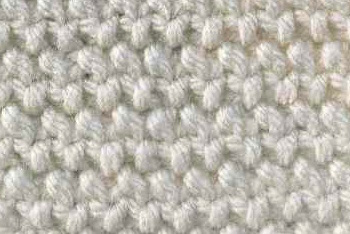 Seed Stitch
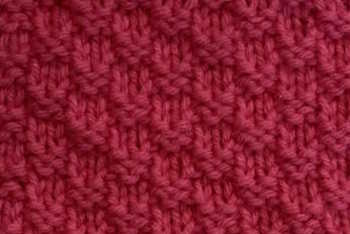 Box Stitch (Double Moss)
Disclosure:
This post contains affiliate links. If you buy through them, I may earn a small commission at no extra cost to you.

Janice Jones is a Certified Knitting and Crochet Instructor who creates beginner-friendly patterns and tutorials, backed by a 389-page library of practical knitting and crochet content.
Most Popular Pages
Comprehensive Guide to Yarn

All Types of Crochet Stitches
36 Reversible Knit Stitch Glossary
How to Crochet the Second Row
Dog Sweater Patterns
Working with Alpaca Yarn
Free eBooks, Just for You
Get my beginner eBook guides to Knitting and Crocheting, just for signing up for my monthly newsletter.
Choose one or both when you sign up.
About the Author: Please allow me to introduce myself
Janice Jones is a Certified Knitting Instructor and Certified Crochet Instructor through the Craft Yarn Council who focuses on beginner-friendly patterns, stitch guides, and technique tutorials. She has built a library of 389 pages on her website, sharing practical instructions and patterns, and has completed projects ranging from crochet blankets to knit sweaters. You can explore her work on her website. She makes items for Warm Up America and often knits and crochets sweaters for her small dogs.
Thank you for visiting Smart-Knit-Crocheting. I hope this and all of my tutorials will give you the inspiration to continue your knit or crochet journey. For a complete list of all the pages on my site, please visit my table of contents.
I participate in the Amazon Services LLC Associates Program, an affiliate advertising program designed to provide a means for sites to earn advertising fees by advertising and linking to Amazon.com. “As an Amazon Associate I earn from qualifying purchases.” These earnings go towards supporting my website.
Home | Contact | About | Privacy Policy | Disclaimer
I DO NOT SELL ANY PERSONAL INFORMATION FROM THIS WEBSITE. PLEASE SEE MY PRIVACY POLICY FOR MORE DETAILS.
Copyright © 2006-2026 Smart Knit Crocheting. All Rights Reserved
Please Share
Remember, Sharing is Caring